

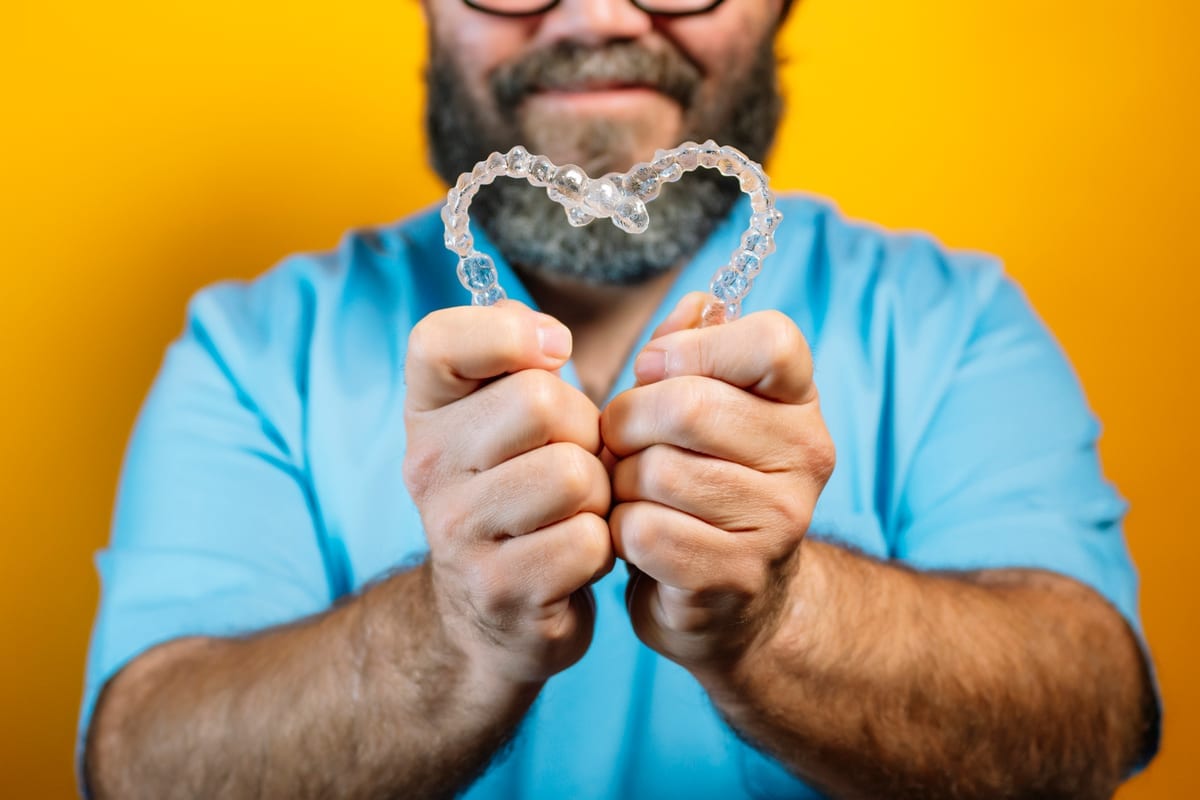
If you’ve been wondering, will Invisalign actually fix your bite problem in Round Rock, you’re not alone. Many patients come to Serenity Dental Studio with the same question. Invisalign has transformed orthodontic care for millions of people. But it isn’t the right solution for every bite issue.
Dr. Hersheal Aggarwal wants you to walk into your consultation fully informed. Understanding what Invisalign can and cannot treat helps you make the best decision for your smile. This article breaks down the most common bite problems and how Invisalign handles each one.
What Bite Problems Can Invisalign Fix in Round Rock?
Invisalign uses a series of clear, removable aligners to move teeth into better positions. These aligners work gradually over time. They apply gentle, consistent pressure to shift teeth precisely. For many common alignment issues, they work remarkably well.
Here are the bite problems Invisalign treats most effectively:
- Mild to moderate crowding — teeth that overlap or sit too close together
- Spacing issues — gaps between teeth caused by missing teeth or natural spacing
- Mild overbite — upper front teeth that extend too far over the lower teeth
- Mild underbite — lower teeth that sit in front of upper teeth
- Crossbite — upper and lower teeth that don’t align properly on one or both sides
- Open bite — front teeth that don’t touch when the mouth is closed
For patients with mild to moderate versions of these issues, Invisalign is often an excellent option. The aligners are comfortable, discreet, and highly effective when used as directed. Most Round Rock patients wear their aligners 20 to 22 hours per day for the best results.
When Invisalign May Not Be Enough for Your Bite
Invisalign has real limitations. It’s important to understand them before committing to treatment. Not every bite problem responds well to clear aligners alone. Some cases require a different approach entirely.
Invisalign tends to fall short in these situations:
- Severe crowding — teeth that are significantly rotated or deeply overlapping
- Large overbite or underbite — significant jaw misalignment that goes beyond tooth positioning
- Skeletal bite problems — issues rooted in jaw structure rather than tooth position
- Severely rotated teeth — back teeth that need complex three-dimensional movement
- Patients with compliance concerns — those who may not wear aligners consistently
When jaw structure is the underlying cause of a bite problem, aligners cannot correct it on their own. Traditional braces, combined with other orthodontic or surgical options, may be necessary. Dr. Aggarwal will always be straightforward with you about what will and won’t work for your specific case.
How Dr. Aggarwal Evaluates Invisalign Candidacy
A proper candidacy evaluation is the most important step before starting Invisalign. At Serenity Dental Studio in Round Rock, Dr. Aggarwal takes a thorough, individualized approach. He doesn’t use a one-size-fits-all checklist. He looks at your full dental and bite picture before making any recommendation.
Your evaluation typically includes digital X-rays and detailed bite analysis. Dr. Aggarwal also examines your gum health and overall oral condition. Invisalign works best when your gums and teeth are healthy before treatment begins. If any underlying dental issues exist, those are addressed first.
He also uses digital scanning technology to map your teeth in 3D. This gives you a visual preview of how your teeth could move during treatment. You’ll leave your consultation with a clear understanding of your candidacy. There are no surprises at Serenity Dental Studio.
Invisalign vs. Traditional Braces — Which Is Right for You?
Both Invisalign and traditional braces are effective orthodontic tools. The right choice depends on the complexity of your bite problem and your lifestyle. Dr. Aggarwal helps patients in Round Rock weigh both options honestly.
Invisalign works best for patients who want a discreet, removable option. It suits adults and teens who are disciplined about wearing their aligners. It’s also a strong choice for mild to moderate alignment issues. If your bite problem falls into this category, Invisalign is often a comfortable and convenient solution.
Traditional braces are better suited for complex cases. They offer more control over difficult tooth movements and severe bite corrections. They’re fixed to your teeth, so compliance isn’t a concern. For younger patients or those with more complicated dental situations, braces may deliver more predictable results.
Neither option is universally superior. The goal is always the same — giving you a healthy, functional bite and a confident smile. Dr. Aggarwal will help you understand which path leads there for your unique situation.
What to Expect After Starting Invisalign Treatment
Once Dr. Aggarwal confirms you’re a good Invisalign candidate, treatment begins with a custom plan. Your aligners are fabricated based on your 3D scan. You’ll receive a series of trays, each worn for about one to two weeks. Progress is monitored through regular check-ins at the practice.
Most patients in Round Rock complete Invisalign treatment in 12 to 18 months. More straightforward cases may finish sooner. The timeline depends on the complexity of your bite issue and how consistently you wear your aligners. Dr. Aggarwal tracks your progress at every visit to make sure things are moving as planned.
After treatment, a retainer is typically required. Retainers help hold your teeth in their new positions. Skipping this step can cause teeth to shift back over time. Dr. Aggarwal will walk you through exactly what retention looks like after your Invisalign journey is complete.
Take the First Step Toward a Better Bite
The best way to know whether Invisalign will fix your bite problem is to get a professional evaluation. General internet research can only take you so far. Every bite is different, and a trained eye makes all the difference. Dr. Hersheal Aggarwal at Serenity Dental Studio is here to give you clear, honest answers.
Residents of Round Rock deserve orthodontic care that actually fits their needs. Whether Invisalign is right for you or another option serves you better, the goal is the same — a bite that works and a smile you’re proud of. Book Now to schedule your appointment with our team.
Frequently Asked Questions
Can Invisalign fix a severe overbite?
Invisalign can treat mild to moderate overbites effectively. However, severe overbites often involve jaw structure issues that aligners alone cannot correct. Dr. Aggarwal will evaluate your bite and let you know whether Invisalign, traditional braces, or a combination approach is the right fit for your case.
How do I know if I’m a good Invisalign candidate in Round Rock?
The best way to find out is through a thorough in-person evaluation. Dr. Aggarwal at Serenity Dental Studio uses digital scans and bite analysis to assess your candidacy. Factors like the severity of your bite problem, your gum health, and your willingness to wear aligners consistently all play a role in that decision.
Will Invisalign work if I have crowded teeth?
Yes, Invisalign treats mild to moderate crowding very effectively. If your crowding is more severe — meaning teeth are significantly rotated or deeply overlapping — traditional braces may produce better results. Dr. Aggarwal will give you an honest recommendation based on your specific level of crowding.
How long does Invisalign treatment take for bite correction?
Treatment length varies based on how complex your bite problem is. Most patients complete Invisalign in 12 to 18 months. Simpler cases may finish faster. Wearing your aligners for 20 to 22 hours per day is the most important factor in staying on schedule.
Does Invisalign require a retainer after treatment?
Yes. After completing Invisalign, wearing a retainer is essential. Retainers keep your teeth in their corrected positions and prevent shifting over time. Dr. Aggarwal will create a retention plan tailored to your bite and explain exactly how long and how often to wear it.