

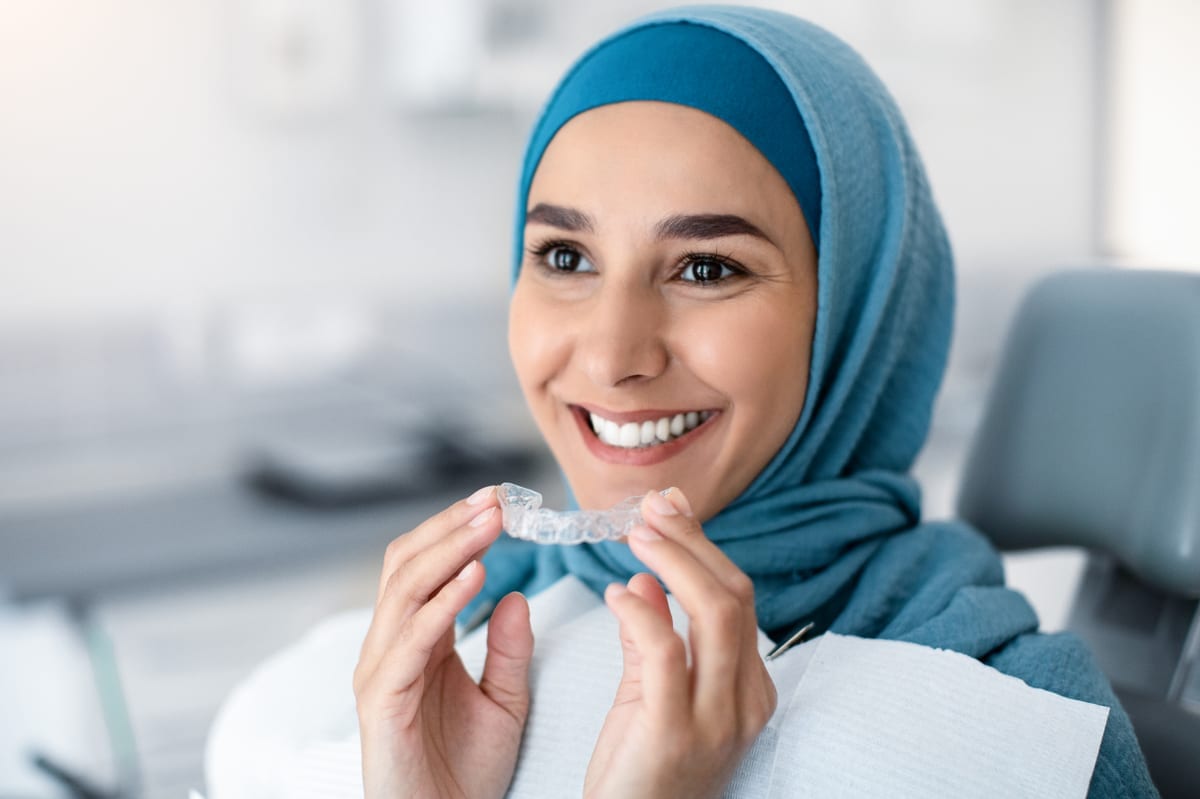
Not every smile is the same — and not every smile responds the same way to treatment. If you have been wondering whether Invisalign could work for you, you are not alone. Many patients in Round Rock ask this exact question. Understanding what Invisalign can and cannot fix helps you make a confident, informed decision before your first appointment.
At Serenity Dental Studio, Dr. Hersheal Aggarwal evaluates each patient individually. Candidacy depends on the type, severity, and complexity of your alignment issues. This guide walks you through the most common conditions Invisalign treats — and the cases where traditional braces may serve you better.
What Invisalign Can Treat in Round Rock Patients
Invisalign uses a series of custom clear aligners to shift teeth gradually into their correct positions. The system works well for a wide range of mild to moderate orthodontic concerns. Many adults and teens in Round Rock are excellent candidates.
Here are the most common conditions Invisalign addresses effectively:
- Mild to moderate crowding — teeth that overlap or press against each other
- Spacing issues — gaps between teeth that affect appearance and function
- Mild overbite — upper front teeth that extend too far over the lower teeth
- Mild underbite — lower teeth that sit in front of the upper teeth
- Crossbite — upper and lower teeth that do not align side to side
- Open bite — upper and lower front teeth that do not meet when you close your mouth
Invisalign technology has improved significantly over the years. Earlier versions only handled simple cases. Today, the system can manage more complex alignment problems than many patients expect.
When Crowding and Spacing Issues Are a Good Fit
Crowding is one of the most common reasons patients seek orthodontic treatment. It happens when there is not enough room in the jaw for teeth to sit straight. Invisalign works well for mild to moderate crowding by gradually creating space and guiding teeth into alignment.
Spacing concerns — like a noticeable gap between front teeth — also respond well to Invisalign. The aligners apply gentle, consistent pressure to close gaps over time. Results are predictable when spacing is not too severe.
Patients with very severe crowding may need more targeted movement than aligners alone can provide. Dr. Aggarwal will take digital scans and X-rays to assess how much movement is needed. That evaluation determines whether Invisalign is the right path forward for your specific situation.
Overbite, Underbite, and Bite Correction with Invisalign
Many people assume Invisalign only straightens teeth. In reality, it can also correct certain bite problems. Mild to moderate overbites and underbites can both be addressed with the right aligner plan.
Invisalign uses precision attachments — small tooth-colored bumps bonded to teeth — to improve leverage during bite correction. These attachments help aligners grip the teeth and produce more complex movements. They are discreet and blend in naturally with your smile.
However, severe bite problems often require traditional braces or more advanced orthodontic intervention. Significant jaw misalignment, for example, may need surgical consultation in addition to orthodontic treatment. Dr. Aggarwal will be honest with you about what Invisalign can realistically achieve.
Here is a quick comparison of what Invisalign handles versus what may require braces:
- Invisalign works well for: mild overbite, mild underbite, minor crossbite, and open bite with moderate severity
- Traditional braces may be better for: severe bite misalignment, significant jaw discrepancies, complex tooth rotation, and large vertical movements
Cases Where Traditional Braces Work Better
Invisalign is a powerful tool — but it has limitations. Some orthodontic cases require the consistent force and precision that fixed braces provide. Knowing when braces are the better choice protects you from a longer or less effective treatment experience.
Severely rotated teeth can be difficult for aligners to move adequately. Certain teeth need to tip, rotate, or be extruded in ways that aligners cannot always achieve predictably. Braces allow for more nuanced control in these situations.
Large vertical movements — pulling a tooth significantly up or down — also favor braces in many cases. Patients who have had multiple previous dental procedures may face additional complexity. Existing crowns, bridges, or significant bone loss can all affect how well aligners perform.
Dr. Aggarwal takes a thorough approach at Serenity Dental Studio. If Invisalign is not the right fit for your smile, he will explain why clearly. The goal is always the best outcome for your long-term oral health — not simply the most convenient option.
What to Expect During Your Invisalign Consultation in Round Rock
Your consultation is the starting point for everything. Dr. Aggarwal will examine your teeth, review digital X-rays, and take a 3D scan of your mouth. This data helps build a precise picture of your current alignment and what needs to change.
From there, you will receive a customized treatment preview. The iTero digital scanner used at Serenity Dental Studio can generate a simulation of your expected results. You get to see your projected smile before committing to any treatment.
Treatment plans vary in length depending on complexity. Most Invisalign cases in Round Rock range from six to eighteen months. Your plan will include clear milestones and check-ins so you always know where you stand.
The consultation is also your chance to ask questions. No concern is too small. Understanding your candidacy from the start makes the entire process smoother and more rewarding.
Conclusion: Find Out If Invisalign Is Right for Your Smile
Determining whether your smile is a good fit for Invisalign requires more than a quick online quiz. It takes a professional evaluation, honest conversation, and the right diagnostic tools. Dr. Hersheal Aggarwal and the team at Serenity Dental Studio are here to guide Round Rock patients through exactly that process. Book Now to schedule your appointment with our team.
Frequently Asked Questions
Can Invisalign fix a severe overbite?
Invisalign can correct mild to moderate overbites effectively. Severe overbites, especially those involving significant jaw misalignment, may require traditional braces or additional orthodontic intervention. Dr. Aggarwal will assess your bite carefully during your consultation to recommend the most appropriate treatment.
Is Invisalign suitable for teenagers in Round Rock?
Yes. Invisalign offers a Teen version designed specifically for younger patients. It includes compliance indicators and extra aligners to account for active lifestyles. Dr. Aggarwal evaluates each teen individually to confirm they are a good candidate before recommending treatment.
How long does Invisalign treatment usually take?
Most Invisalign treatment plans range from six to eighteen months. The exact timeline depends on the complexity of your alignment issues and how consistently you wear your aligners. Wearing them for the recommended 20 to 22 hours per day keeps your treatment on schedule.
What happens if Invisalign is not right for my case?
If Invisalign cannot achieve your desired results, Dr. Aggarwal will discuss alternative options with you. Traditional braces or other orthodontic approaches may be recommended. The priority at Serenity Dental Studio is always finding the treatment that delivers the safest and most effective outcome for your smile.
Does Invisalign work for gaps between teeth?
Yes, Invisalign is very effective at closing gaps caused by spacing issues. The aligners apply steady pressure to bring teeth closer together over time. Very large gaps or spacing related to missing teeth may require additional treatment planning alongside Invisalign.